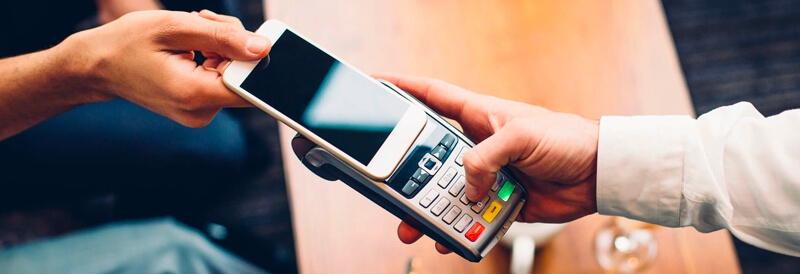
Have you ever seen a customer hold their phone over a card reader to pay in a store and wondered what they were doing? Would you feel comfortable paying with a mobile device instead of with cash, a debit, or a credit card? In today’s world, there are more ways than ever to pay for goods and services. The option to use a digital wallet is becoming increasingly common. The concept can be confusing at first, but the technology can be helpful for busy daily life. Read on to gain an understanding of how a digital wallet works and if it is right for you.
In simple terms, a digital wallet is an electronic version of the physical wallet you carry. It stores payment information for debit and credit cards in an online account. When you are making a purchase, you can use a digital wallet to provide payment information instead of presenting your actual plastic debit or credit card each time.
Digital wallets can be used on mobile devices, such as smartphones, smartwatches, or tablets. Common mobile apps include Apple Pay, Fitbit Pay, Garmin Pay, Google Pay, and Samsung Pay. Your device may have even come with a preloaded mobile wallet!
So when you pay in a store, there’s nothing to swipe or insert at the register. Mobile wallets allow for contactless payments which usually involves opening your mobile wallet app and then holding your device over the payment reader. This is possible because of technology called near-field communication (NFC) that allows devices to exchange information without touching.
Paying in this manner uses what’s called tokenization to assign a device account number (DAN) in place of your 16-digit account number. When you pay, the DAN is passed to the merchant instead of your actual account number. That way, if your device account number is stolen, your account is still safe. A new DAN can then be assigned to take the place of the one that was compromised.
Here are 3 reasons to consider using a digital wallet:
- Convenience. In mere seconds, you can complete a transaction using a digital wallet with a tap or wave of the smartphone or wearable at the checkout terminal.
- Efficiency. No more digging in your purse or wallet for the right card. Plus, you’ll get through the checkout line quicker due to the speedy nature of the transaction.
- Less lugging items around. If you are like most people, your phone is always with you. If you can store your payment cards in a digital wallet, you can pay at accepting stores without needing to carry your physical wallet with you – meaning one less item to carry.
With a better understanding of this payment technology, you can determine whether using a digital wallet as a payment method is right for you. Are you ready to embrace this high-tech payment option? If so, click here for specific instructions on how to add your First Citizens debit or credit card to a digital wallet on your particular device. Whether it’s a smartphone, a smartwatch or a tablet that you are setting up, the process is usually straightforward, so you can start leaving your physical cards safe and sound at home.
August 19, 2019 by First Citizens Bank
By clicking the links above, you are now leaving First Citizens Bank's website and are going to a website that is not operated by the bank. First Citizens Bank is not responsible for the content; availability of linked sites; does not endorse or guarantee the products, information, or recommendations; and is not liable for any failure of products or services provided by the linked website. Please be advised that First Citizens Bank does not represent either the third party or you, the customer, if you enter into a transaction. Further, the privacy policy of this site owner may be different than that of the bank and this site may provide less security than the bank's website. We encourage you to read the privacy policies of websites reached through the use of links from the First Citizens Bank website.