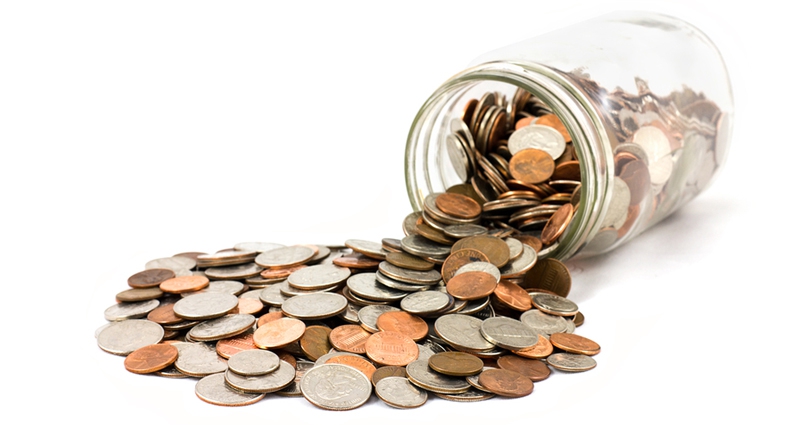
Do you have any pennies, nickels, dimes, or quarters? Right now they are in high demand due to the reduced flow of coins through the economy. Is the COVID-19 pandemic coin disruption equivalent to the toilet paper shortage we have recently gone through? What can be done about it?
Before answering these questions, it’s helpful to know the U.S. Mint is responsible for all coin production, while the Federal Reserve (the “Fed”) is responsible for keeping track of it all. If a retailer needs change, they get it from their bank, who ordered it from the Fed.
Back in March and April this year while much of the country observed “stay at home” orders, the U.S. Mint adjusted their work environment for employee safety, mainly by cutting the number of employees per shift so they could observe social distancing requirements. This led to decreased coin production - down 10% in April and 20% in May.
At the same time, fewer coins were being circulated by the public as many of us were at home – decreasing cash purchases and frequent visits to change-heavy businesses like Laundromats, retail shops, or gas stations. This caused retailers to rely more on banks for their change requirements, which meant banks ordered more coins from the Fed.
In a meeting with Congress in June, U.S. Federal Reserve Chair Jerome Powell said "The COVID‐19 pandemic has significantly disrupted the supply chain and normal circulation patterns for U.S. coin. In the past few months, coin deposits from depository institutions to the Federal Reserve have declined significantly and the U.S. Mint’s production of coins also decreased due to measures put in place to protect its employees."
In early July, the Fed put together a “Coin Task Force” which includes the American Bankers Association, alongside representatives from the Fed, the U.S. Mint, the armored car industry, food distribution, and other sectors. This task force is designed to identify, implement, and promote actions to reduce the consequence and duration of COVID-19 related disruptions to normal coin circulation.
As the economy opens more broadly, we should start to see coins move around again. In the meantime, is there anything that can be done? The best thing you can do is to find the change hiding in coin jars, cup holders, and couches and:
- Use it to buy things and pay as much as you can with the coins. Try your best to pay in exact change if possible. This gives businesses some change to use and does not require them to use the coins they do have. Some businesses are encouraging people to round up their change to make a donation to a charity. This is a great way to help others in need!
- Bring it to the First Citizens Bank location nearest you and exchange it for bills.
- Deposit it into an existing FCB account or open a new account! Say, doesn’t a vacation savings fund sound pretty good right now!
There is no fee to count coins, even for non-customers! By bringing in your coins, it allows our branch locations to have the coins we need to provide change for the local businesses in our area. It’s a win win! We will accept coins in the first drive up lane (when there are multiple lanes), through curbside banking, or make an appointment to bring it into the bank.
August 3, 2020 by First Citizens Bank
By clicking the links above, you are now leaving First Citizens Bank's website and are going to a website that is not operated by the bank. First Citizens Bank is not responsible for the content; availability of linked sites; does not endorse or guarantee the products, information, or recommendations; and is not liable for any failure of products or services provided by the linked website. Please be advised that First Citizens Bank does not represent either the third party or you, the customer, if you enter into a transaction. Further, the privacy policy of this site owner may be different than that of the bank and this site may provide less security than the bank's website. We encourage you to read the privacy policies of websites reached through the use of links from the First Citizens Bank website.